AI agent New
Kento Workspace
Your access to the AI agent and all Economatica services, on any device.
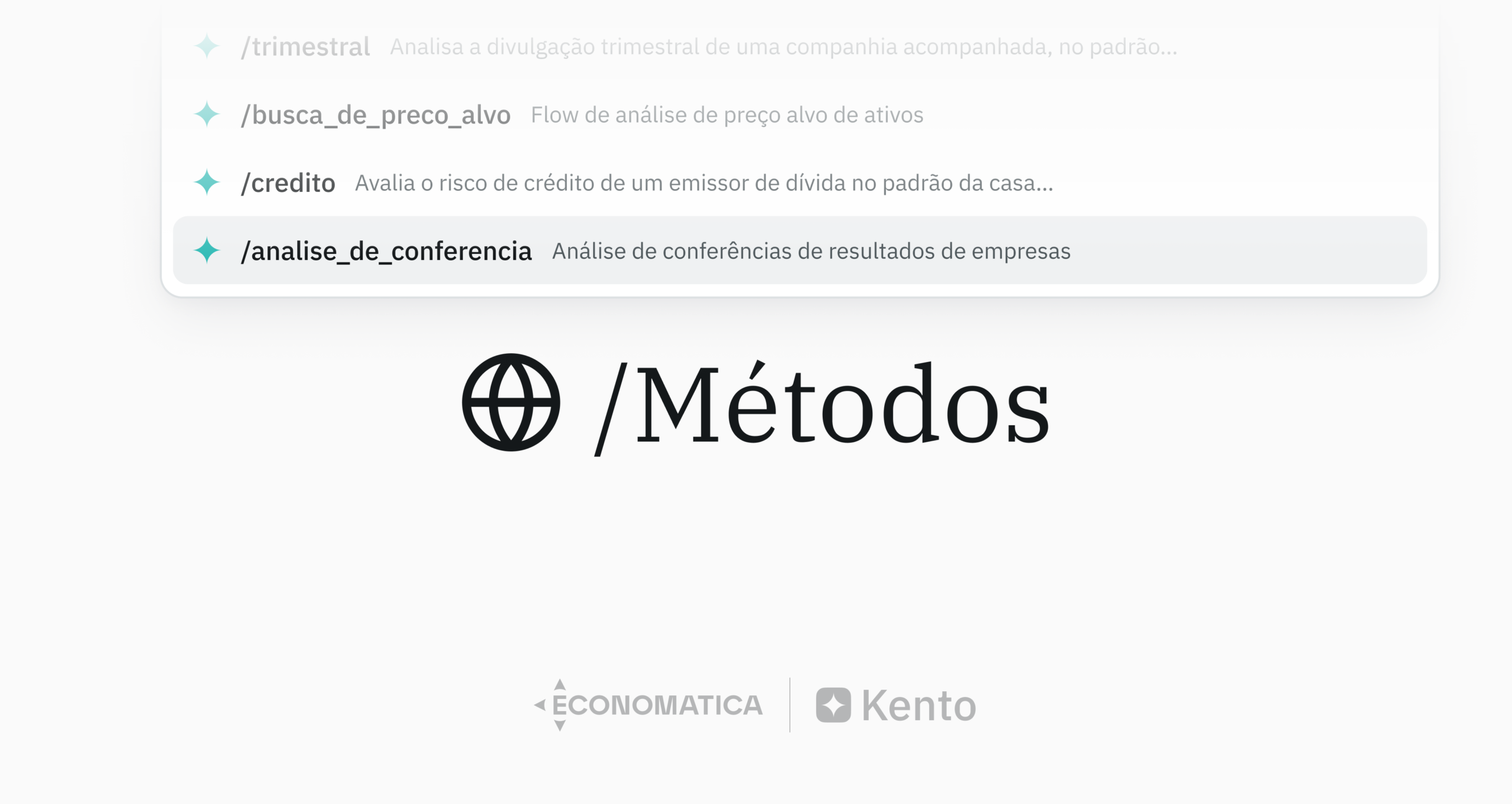
Every analysis starts with a question. Every consistent answer starts with a method. Even when an organization has strong data and experienced professionals, the quality of an analysis can vary with the person making the request, the way the question is phrased and the criteria they remember to include.
Methods let Kento, Economatica's productivity agent, apply an organization's own methodology across its team. The firm defines how a type of analysis should be conducted once. Kento then follows those instructions in chat, scheduled Routines and enabled channels such as WhatsApp and Telegram. Knowledge becomes part of the organization's working process instead of depending on a few people who know how to do the task.
A saved prompt repeats an instruction. A Method establishes an execution standard. In the editor, the organization can specify how the analysis should be conducted, what information it must include, what must never be done, which sources take priority, how to handle missing information and the structure of the final deliverable.
These criteria are checked before Kento delivers its answer. The response reports which requirements were verified. If necessary information is unavailable, Kento identifies the gap instead of filling it with an assumption. A Method is therefore a verifiable obligation: the firm defines the required deliverable and Kento checks it before completing the response.
Much of an institution's most valuable knowledge lives in its people: the analyst who knows what matters in quarterly earnings, the credit specialist who knows which risks cannot be ignored, or the adviser who has developed an effective way to prepare for a client meeting.
When that knowledge stays with a few individuals, equivalent deliverables vary, onboarding depends on one-to-one guidance and processes are harder to review. Methods turn expertise into a shared reference. The methodology remains the firm's own, while Kento can execute it for authorized people.
This can reduce variation across deliverables, speed up onboarding and let the organization update a process centrally. Improving one Method improves every subsequent analysis that uses it.
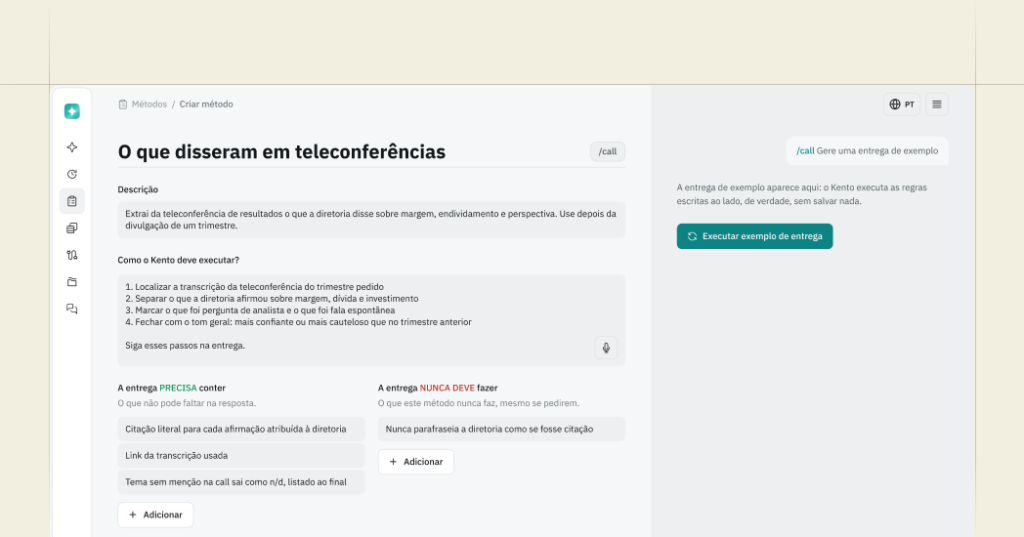
1. The organization defines the Method. In the editor, a professional describes how the work should be done, much as a specialist would instruct a colleague. No programming or technical integration is required.
2. The team uses it. An authorized person can request an analysis by its name or command. Kento can also suggest a suitable Method. The same standard can be used in a Kento Workspace conversation or attached to a Routine for recurring execution.
3. Kento delivers and records it. The answer identifies the Method, its version and the criteria checked during execution. Readers can understand both the result and the standard that produced it.
Methods do not impose a single Economatica methodology. Each organization decides how to analyze a company, assess an issuer, prepare a committee or structure a briefing. Kento applies that process more consistently.
Two firms may both use Methods for credit analysis yet set very different criteria. One may prioritize capital structure and liquidity; another may give greater weight to governance, collateral or sector exposure. Kento respects each organization's choices, and one firm's Methods are never shown to another. The result is standardization without uniformity.
Formal processes need governance as well as consistency. Each Method has an owner, version history and access rules. An edit creates a new version with its author and a summary of the change. New executions use the current version.
A Method can be tested privately before release and archived later without losing its history. Executions and verified criteria are recorded in Audit. This lets a team answer practical questions: Which methodology produced an analysis? Which version was in effect? Who changed it? What was checked before delivery? Does it still reflect the firm's current rules?
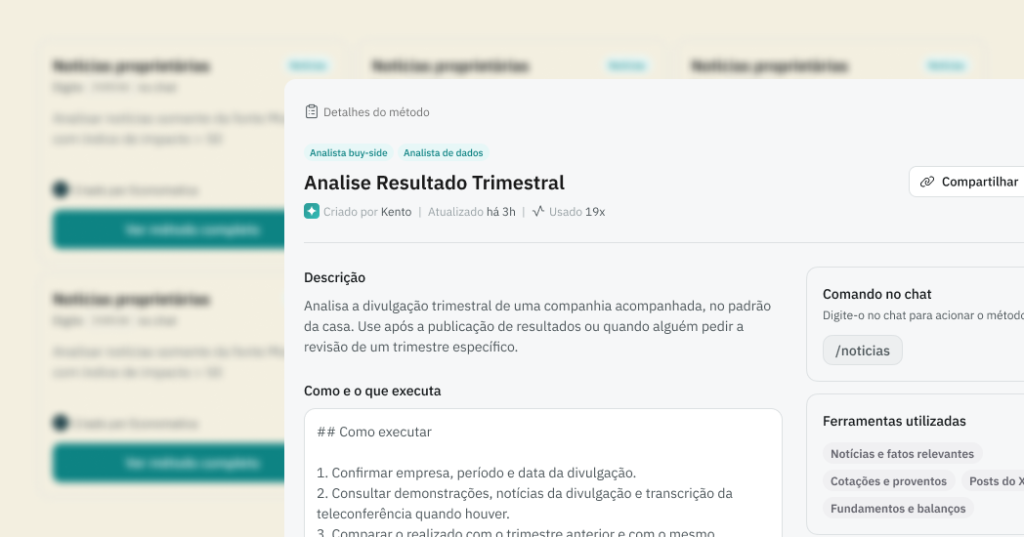
The Kento Method Library includes five Economatica templates: Quarterly Earnings Analysis, the firm's Morning Note, Client Meeting Preparation, Issuer Credit and What Was Said on Earnings Calls.
An organization can adopt a template, adapt it to its process or make a private copy for testing. Templates are starting points. The institutional value comes from adding the firm's own criteria, sources, restrictions and deliverable formats.
An asset manager can define a standard for reviewing portfolio-company earnings. A credit team can set minimum issuer-assessment criteria. An advisory firm can standardize meeting preparation. A bank can structure recurring committee briefings.
The benefit is more than a faster answer: the deliverable follows the way the organization has decided to work. Professionals retain judgment and make the decisions. Kento organizes execution, checks the defined criteria and makes the process more consistent.
Start with a recurring analysis whose quality still varies between people or occasions. Adopt a Library template or create a Method, record the criteria used by experienced professionals, test it privately and publish it to the team after approval. A single well-defined Method can begin turning individual knowledge into an institutional standard.
Methods are available to Kento Workspace customers. The knowledge base also includes new guidance on creating, governing and using Methods in chat, Routines and connected channels.
The methodology remains the firm's own. Kento turns it into an executable, versioned and traceable standard for the team.
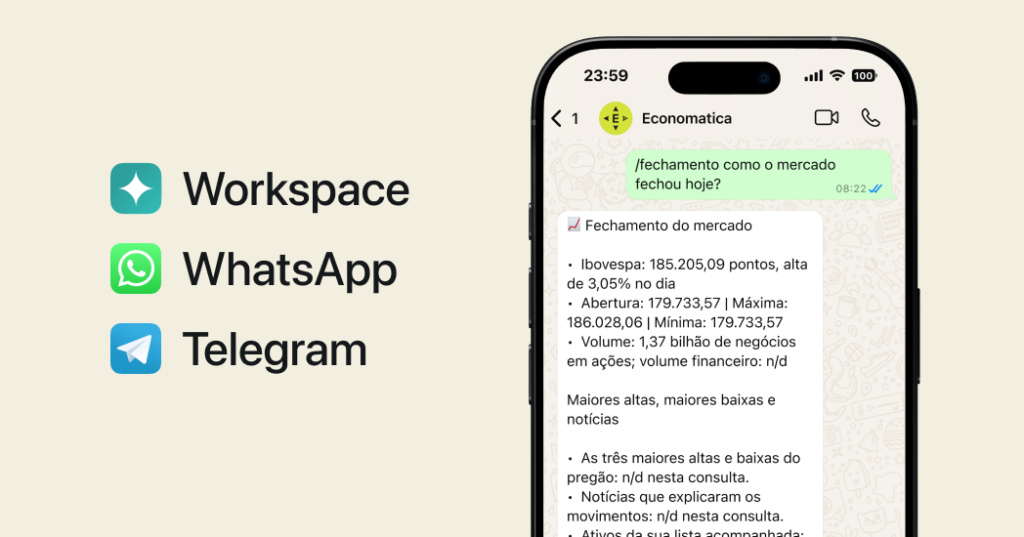
Explore the Method Library in Kento Workspace, or contact Economatica for a demonstration.

Economatica's official Perplexity connector brings financial data and Kento tools into the research workflow professionals already use.
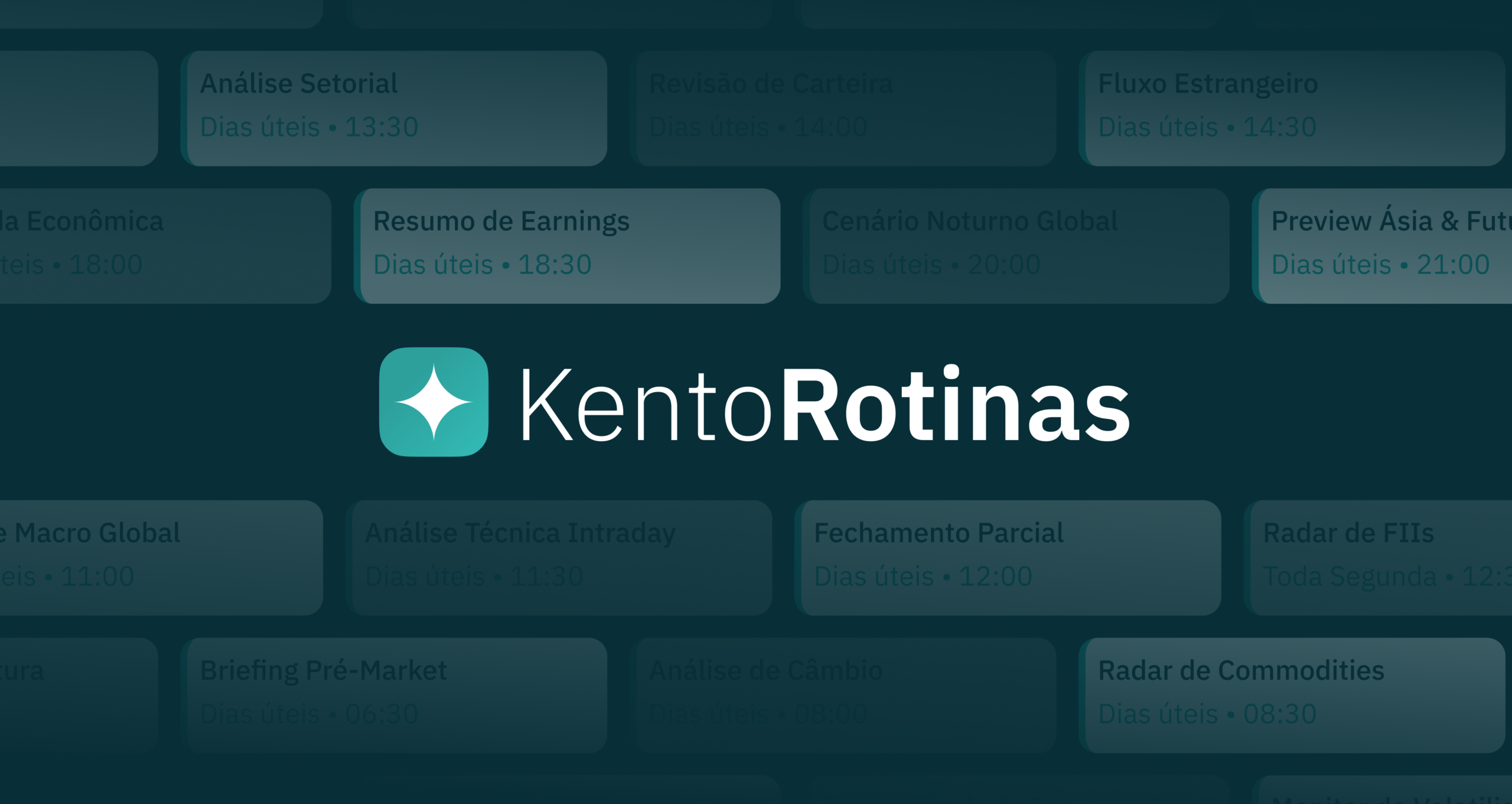
Kento Routines turn recurring financial research into scheduled briefings delivered through chat, email, WhatsApp or Telegram.
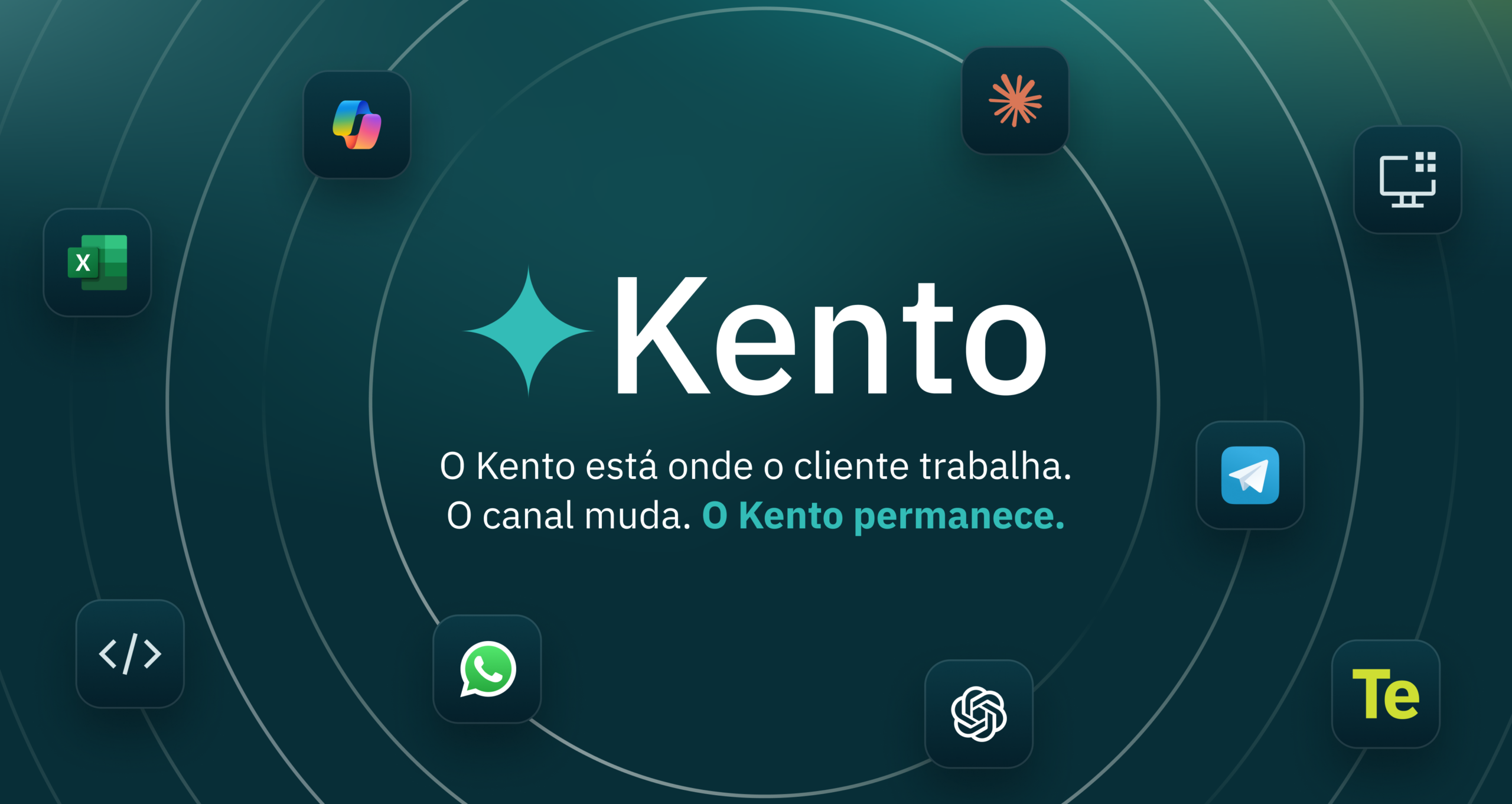
Kento AI brings Economatica data, organizational context and financial tools into the channels where professionals already work.
See how Economatica data and tools support research, decisions and daily work across your team.
Choose where to log in